Sales Automation: US Companies Saving 10 Hours Weekly with AI in 2025

The latest in sales automation: How US companies are saving 10 hours weekly with new AI tools in 2025 is transforming operations, enabling businesses to streamline processes, enhance customer engagement, and significantly boost overall productivity.
The landscape of sales is undergoing a profound transformation, driven by the relentless pace of technological innovation. In 2025, a critical shift is evident: the latest in sales automation: How US companies are saving 10 hours weekly with new AI tools in 2025 is no longer a futuristic concept but a tangible reality for businesses across the United States. This paradigm shift is redefining how sales teams operate, allowing them to reclaim valuable time, focus on strategic initiatives, and cultivate deeper customer relationships. The integration of advanced AI tools into daily sales workflows is proving to be a game-changer, promising not just incremental improvements but exponential growth in efficiency and effectiveness.
The Rise of AI in Sales: A New Era of Efficiency
Artificial intelligence has moved beyond theoretical discussions to become an indispensable asset in the sales arsenal. Its ability to analyze vast datasets, automate repetitive tasks, and provide predictive insights is fundamentally reshaping sales strategies. For US companies, this means a significant reduction in time spent on administrative duties, freeing up sales professionals to engage in more meaningful, high-value activities that directly drive revenue.
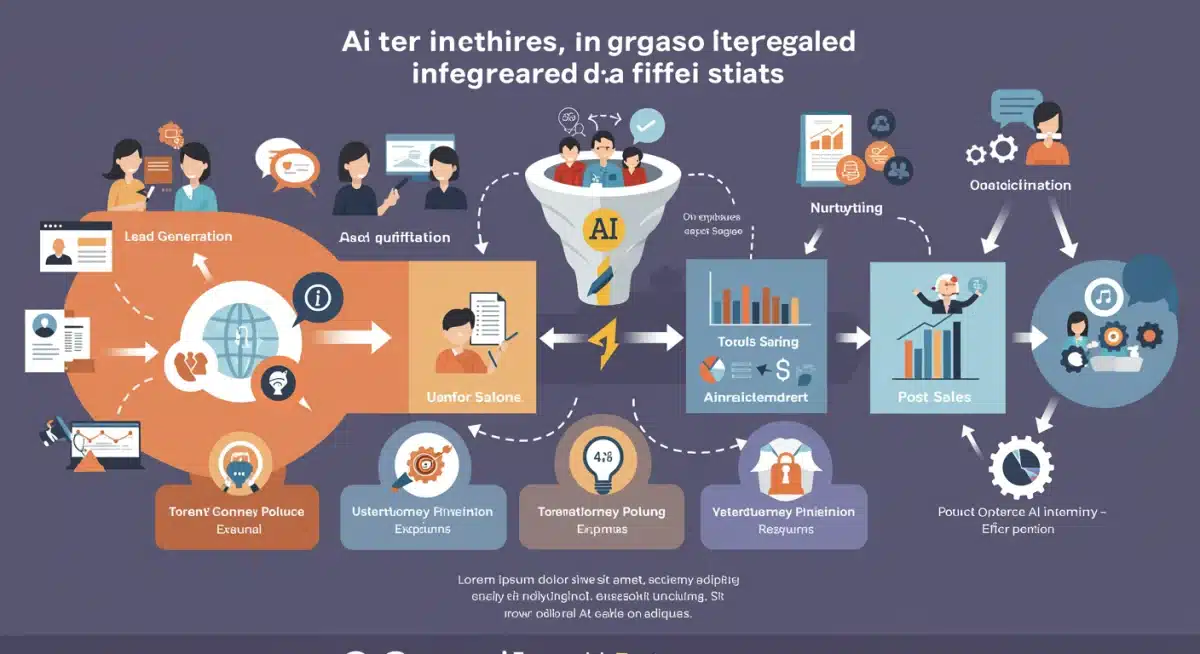
The impact of AI is pervasive, touching every stage of the sales cycle from lead generation to post-sale customer support. It’s not about replacing human interaction but augmenting it, providing sales teams with superpowers to perform better and faster. This enhanced capability translates directly into tangible benefits, most notably the significant weekly time savings that are becoming the new standard.
Automating Lead Generation and Qualification
One of the most time-consuming aspects of sales has traditionally been lead generation and qualification. AI-powered tools are now automating these processes with remarkable precision, identifying high-potential leads and scoring them based on various criteria.
- Predictive Lead Scoring: AI algorithms analyze historical data to predict which leads are most likely to convert, allowing sales reps to prioritize their efforts.
- Automated Prospecting: Tools can scour the internet for potential customers based on predefined parameters, gathering contact information and relevant data.
- Behavioral Analysis: AI monitors prospect behavior on websites and social media, providing insights into their interests and intent, which helps in tailoring outreach.
By automating these initial steps, sales teams can bypass much of the manual research and guesswork, focusing their energy on engaging with prospects who are genuinely interested and ready to buy. This targeted approach dramatically improves conversion rates and reduces wasted effort.
Personalized Customer Engagement at Scale
In a competitive market, personalized engagement is key to capturing and retaining customer attention. AI tools are enabling sales professionals to deliver highly customized experiences, even when dealing with a large volume of prospects. This level of personalization, once reserved for high-value clients, is now scalable to a broader audience, fostering stronger relationships and brand loyalty.
The ability to understand individual customer needs and preferences through AI-driven insights allows for more relevant communication and tailored solutions. This moves away from generic, one-size-fits-all approaches, making every customer interaction feel unique and valued.
AI-Driven Content Creation and Delivery
Crafting compelling and relevant content for each prospect can be incredibly time-intensive. AI is stepping in to streamline this process, from generating personalized email drafts to recommending the most effective content pieces.
- Dynamic Content Generation: AI can create customized email subject lines, body text, and call-to-actions based on prospect data and engagement history.
- Content Recommendation Engines: These systems suggest the most appropriate sales collateral (e.g., case studies, whitepapers, testimonials) for specific stages of the sales cycle.
- Automated Follow-ups: AI schedules and sends personalized follow-up emails, ensuring no lead falls through the cracks and maintaining consistent communication.
This automation ensures that prospects receive timely and relevant information, significantly enhancing their journey through the sales funnel and improving the likelihood of conversion. The precision and speed of AI in content delivery are unparalleled.
Streamlining Sales Workflows and Operations
Beyond individual tasks, AI is optimizing entire sales workflows, leading to a more cohesive and efficient operational framework. This holistic approach to automation ensures that every step of the sales process is as streamlined as possible, minimizing bottlenecks and maximizing productivity. US companies are actively leveraging these capabilities to create leaner, more agile sales organizations.
The integration of AI into CRM systems and other sales platforms creates a unified ecosystem where data flows seamlessly, providing real-time insights and enabling proactive decision-making. This operational efficiency is a cornerstone of the 10-hour weekly savings reported by many companies.
Intelligent CRM and Data Management
Managing customer data is crucial but often cumbersome. AI-powered CRM systems are transforming data entry, analysis, and utilization, making them more intelligent and less labor-intensive.
- Automated Data Entry: AI can automatically populate CRM fields from emails, calls, and other interactions, reducing manual input errors and saving time.
- Data Cleansing and Enrichment: AI tools continuously clean and update customer data, ensuring its accuracy and completeness, and enriching profiles with additional relevant information.
- Predictive Analytics: Beyond lead scoring, AI analyzes customer data to predict future trends, identify cross-selling or up-selling opportunities, and forecast sales outcomes.
These intelligent data management capabilities provide sales teams with a clearer, more comprehensive view of their customers and pipeline, enabling them to make data-driven decisions that propel sales forward.
Enhanced Sales Performance and Coaching
AI is not just about automating tasks; it’s also about elevating human performance. By providing sales professionals with actionable insights and personalized coaching, AI tools are helping teams improve their skills, refine their strategies, and ultimately achieve better results. This intelligent support system is a key factor in boosting overall sales effectiveness.
The ability of AI to analyze sales calls, emails, and presentations provides invaluable feedback that human managers might miss. This objective assessment allows for targeted training and development, leading to a more skilled and confident sales force.
AI-Powered Sales Coaching and Training
Sales coaching is being revolutionized by AI, offering personalized insights and recommendations that cater to individual sales reps’ strengths and weaknesses.
- Call Analysis: AI transcribes and analyzes sales calls, identifying key phrases, sentiment, and adherence to scripts, providing feedback on communication effectiveness.
- Performance Prediction: AI can predict which sales reps are likely to meet or exceed quotas based on their activities and historical performance, allowing managers to intervene proactively.
- Skill Gap Identification: By analyzing performance data, AI pinpoints specific areas where a sales rep might need additional training or coaching, such as objection handling or closing techniques.
This data-driven approach to coaching ensures that training is highly relevant and impactful, directly contributing to improved sales performance and a more competent sales team.
Real-World Impact: US Companies Saving 10 Hours Weekly
The reported savings of 10 hours weekly are not merely anecdotal; they are a quantifiable outcome for many US companies embracing AI sales automation. This substantial time recovery translates into numerous benefits, from increased sales activity to improved work-life balance for sales professionals. The efficiency gains are truly transformative, allowing businesses to reallocate resources and focus on growth.
These savings are achieved through a combination of automated routine tasks, intelligent insights that guide strategic decisions, and enhanced productivity across the sales organization. The ripple effect of this efficiency is profound, leading to better customer experiences and a more competitive market position.
Case Studies and Success Stories
Numerous US companies across various industries are reporting significant success with AI sales automation. From small startups to large enterprises, the benefits are clear and measurable.
- Increased Sales Velocity: Companies report faster sales cycles due to quicker lead qualification and personalized outreach.
- Higher Conversion Rates: Targeted engagement and data-driven insights lead to more successful conversions.
- Improved Customer Satisfaction: Personalized communication and efficient support enhance the overall customer experience.
These real-world examples underscore the practical advantages of integrating AI into sales processes, demonstrating that the investment in these tools yields substantial returns in both time and revenue.
The Future Outlook: What’s Next for Sales Automation?
The current advancements in AI sales automation are just the beginning. The future promises even more sophisticated tools and integrated systems that will further redefine sales strategies. As AI continues to evolve, its capabilities will expand, offering new ways to optimize every facet of the sales process. US companies that embrace these emerging technologies will maintain a significant competitive edge.
Anticipating these future trends and preparing for their integration will be crucial for businesses aiming to stay ahead. The continuous evolution of AI will demand adaptability and a willingness to innovate, ensuring that sales teams can leverage the most advanced tools available.
Emerging AI Technologies and Trends
- Generative AI for Sales Content: More advanced AI models will be able to generate highly sophisticated and nuanced sales content, including complex proposals and presentations.
- Hyper-Personalization: AI will enable even deeper levels of personalization, anticipating customer needs before they are explicitly stated and proactively offering solutions.
- Voice AI in Sales: Advanced voice recognition and natural language processing will power more intelligent sales assistants and automated call centers, providing seamless customer interactions.
- Ethical AI in Sales: A growing focus on ethical AI development will ensure transparency, fairness, and privacy in automated sales processes.
These future innovations will undoubtedly contribute to even greater efficiencies and more impactful sales outcomes, solidifying AI’s role as an indispensable partner in sales.
| Key Aspect | Description of Impact |
|---|---|
| Time Savings | US companies are saving over 10 hours weekly through AI-driven automation of repetitive sales tasks. |
| Enhanced Personalization | AI enables scalable, highly personalized customer engagement, improving relevance and conversion. |
| Operational Efficiency | Streamlined workflows and intelligent CRM systems lead to more cohesive and productive sales operations. |
| Improved Performance | AI-powered coaching and analytics help sales teams refine skills and achieve better results. |
Frequently Asked Questions About AI Sales Automation
AI automates various sales tasks including lead generation, qualification, predictive lead scoring, data entry, personalized email drafting, content recommendations, and scheduling follow-ups. This frees up sales professionals from repetitive administrative work, allowing them to focus on high-value interactions and strategic initiatives.
AI saves sales teams approximately 10 hours weekly by streamlining manual processes like prospecting, data management, and personalized outreach. By providing intelligent insights and automating routine communications, AI enables sales professionals to optimize their time, accelerate sales cycles, and concentrate on closing deals and building relationships.
AI is primarily augmenting human sales roles rather than replacing them. It handles the mundane, repetitive tasks, allowing sales professionals to dedicate their expertise to complex negotiations, relationship building, and strategic thinking. AI empowers sales teams with better data and insights, making them more effective and efficient in their roles.
AI-driven personalization leads to higher engagement rates, improved customer satisfaction, and increased conversion rates. By analyzing customer data, AI helps tailor communications, product recommendations, and offers, making each interaction feel unique and relevant. This fosters stronger customer loyalty and enhances the overall buying experience.
Future trends include more sophisticated generative AI for sales content, hyper-personalization that anticipates needs, advanced voice AI for sales assistants, and a greater focus on ethical AI development. These innovations will further enhance efficiency, provide deeper customer insights, and create more seamless, intelligent sales processes.
Conclusion
The integration of AI into sales automation is not merely a technological upgrade; it represents a fundamental shift in how US companies approach their sales strategies. The ability to save over 10 hours weekly with new AI tools in 2025 is a testament to the profound impact these innovations are having on productivity, efficiency, and ultimately, profitability. By automating repetitive tasks, providing personalized insights, and streamlining workflows, AI empowers sales professionals to focus on what they do best: building relationships and closing deals. As these technologies continue to evolve, businesses that embrace AI will undoubtedly secure a significant competitive advantage, driving growth and shaping the future of sales.