Walmart Marketplace API Enhancements: 20% Faster Inventory Updates
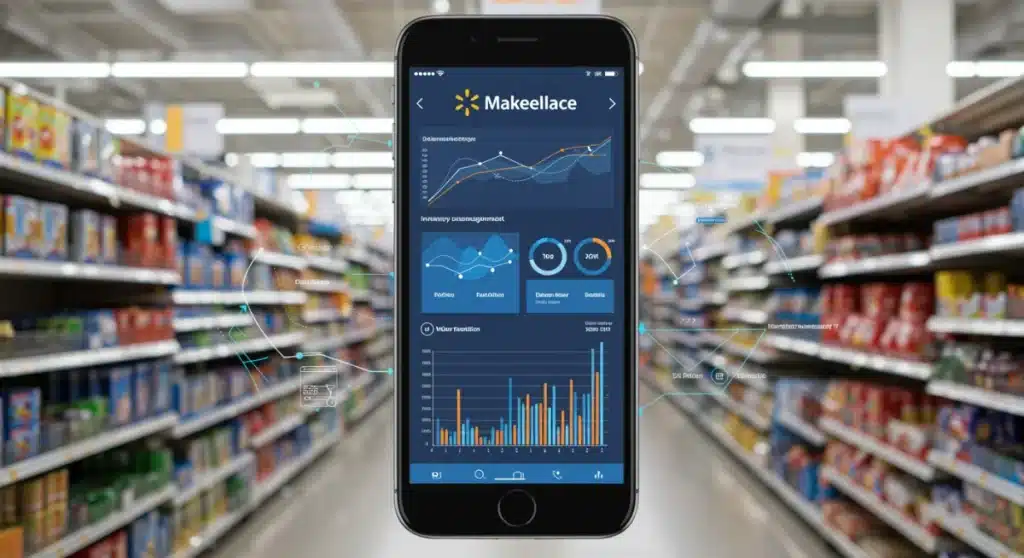
Walmart Marketplace’s recent API enhancements have significantly improved inventory update speed by 20% for US stores, offering sellers enhanced efficiency and better stock accuracy, directly impacting sales performance.
The landscape of e-commerce is constantly evolving, and staying ahead requires continuous innovation. For sellers on the Walmart Marketplace, the latest API enhancements represent a significant leap forward, particularly in inventory management. These updates are designed to streamline operations, promising up to a 20% increase in the speed of Walmart Marketplace’s Recent API Enhancements: Streamlining Inventory Updates by 20% for US Stores, a crucial factor for maintaining competitive advantage and ensuring customer satisfaction in the fast-paced retail environment.
Understanding the Impact of API Enhancements
The recent improvements to Walmart Marketplace’s API are not merely technical tweaks; they represent a fundamental shift in how sellers can manage their inventory. These enhancements directly address common pain points experienced by online retailers, such as outdated stock levels, overselling, and missed sales opportunities. By boosting the speed at which inventory updates propagate across the platform, Walmart is empowering sellers with greater control and real-time visibility over their product availability. This translates into more accurate listings, fewer order cancellations due to out-of-stock items, and ultimately, a better shopping experience for customers.
The need for speed in e-commerce inventory
In the digital age, consumers expect instant gratification. When a product is listed as available, they expect it to be in stock and ready for shipment. Slow inventory updates can lead to a cascade of negative consequences, from customer frustration to damaged seller ratings. Walmart’s focus on accelerating these updates underscores a commitment to fostering a more efficient and reliable marketplace for both sellers and buyers.
- Reduced overselling incidents.
- Improved customer satisfaction due to accurate stock data.
- Enhanced ability to manage flash sales and promotions.
- More efficient utilization of warehouse space.
The direct impact of these enhancements is a more agile and responsive selling environment. Sellers can react quicker to changes in demand, manage returns and restocks more seamlessly, and ensure their online storefront accurately reflects their physical inventory. This level of synchronization is paramount for scaling operations and maintaining profitability in a highly competitive market.
Key Features of the New API Updates
Walmart Marketplace’s recent API enhancements introduce several critical features aimed at optimizing inventory management workflows. These improvements are designed to be intuitive and integrate smoothly with existing seller systems, minimizing disruption while maximizing efficiency. The core focus remains on data transfer speed and accuracy, ensuring that every inventory adjustment is reflected almost instantaneously across the platform.
Real-time inventory synchronization
One of the most impactful features is the near real-time synchronization capabilities. Previously, there could be noticeable delays between an inventory change in a seller’s system and its reflection on the Walmart Marketplace. The new API significantly reduces this latency, allowing for more dynamic inventory adjustments.
- Faster processing of bulk inventory updates.
- Improved handling of partial stock adjustments.
- Enhanced error reporting for quicker issue resolution.
- Increased capacity for concurrent update requests.
These capabilities mean that if a product sells out in a physical store, the online listing can be updated almost immediately, preventing an online customer from purchasing an unavailable item. Conversely, if new stock arrives, it can be made available for sale on the marketplace without significant delay, capturing potential sales.
The enhanced API also supports more granular control over inventory data. Sellers can now implement more sophisticated inventory strategies, such as setting aside specific stock for online orders versus in-store purchases, or managing inventory across multiple fulfillment centers with greater precision. This level of detail was previously more challenging to achieve efficiently.
Benefits for US Stores and Sellers
The 20% streamlining of inventory updates through Walmart Marketplace’s API enhancements offers substantial benefits for US stores and sellers operating within the platform. These advantages extend beyond mere operational efficiency, touching upon sales growth, customer loyalty, and overall business scalability. For sellers, time is money, and faster updates translate directly into more effective resource allocation and reduced administrative overhead.
Boosting sales and reducing stockouts
Perhaps the most immediate and tangible benefit is the direct impact on sales. By ensuring inventory accuracy, sellers can confidently list more products and avoid the frustration of stockouts. When a customer sees an item listed as available, they are more likely to complete a purchase, knowing that their order will be fulfilled promptly. This reliability builds trust and encourages repeat business.
- Higher conversion rates due to accurate availability.
- Fewer abandoned carts caused by unexpected stock issues.
- Improved search ranking from consistent product availability.
- Opportunity to fulfill more orders, increasing overall revenue.
Moreover, the enhanced API helps prevent overselling, a common issue that leads to order cancellations and negative customer experiences. By providing real-time data, sellers can avoid promising products they don’t have, thereby protecting their reputation and maintaining high seller performance metrics, which are vital for visibility on the marketplace.
Technical Deep Dive: How the API Achieves 20% Faster Updates
Achieving a 20% increase in inventory update speed is a significant technical accomplishment, rooted in several key architectural and protocol improvements within the Walmart Marketplace API. These enhancements are designed to optimize data transfer, reduce processing overhead, and improve system responsiveness, ultimately leading to a more fluid experience for sellers.
Optimized data transfer protocols
A primary factor contributing to the speed increase is the optimization of the underlying data transfer protocols. Walmart has likely implemented more efficient data compression techniques and possibly upgraded its server infrastructure to handle a higher volume of concurrent requests with lower latency. This means that when a seller sends an inventory update, the data travels faster and is processed more quickly by Walmart’s systems.
- Leveraging asynchronous processing for non-blocking updates.
- Implementing more robust caching mechanisms at critical junctures.
- Upgrading database indexing and query optimization for faster data retrieval.
- Introducing new endpoints specifically designed for high-frequency inventory changes.
Furthermore, the API may now utilize more lightweight data formats or more efficient parsing algorithms, reducing the time it takes for both the seller’s system and Walmart’s platform to interpret and act upon inventory data. These technical refinements, while often invisible to the end-user, are critical in achieving such a notable performance improvement. The focus on reducing bottlenecks at every stage of the data lifecycle ensures that inventory updates are not just faster, but also more reliable.
Integrating with the Enhanced API: A Seller’s Guide
For sellers currently operating on Walmart Marketplace, integrating with the enhanced API requires a thoughtful approach. While the benefits are clear, a smooth transition is essential to avoid disruptions to ongoing operations. Walmart has typically provided comprehensive documentation and support for such transitions, aiming to make the process as straightforward as possible for its diverse seller base. Understanding the new API’s structure and capabilities is the first step towards leveraging its full potential.
Steps for a successful integration
Sellers should begin by reviewing Walmart’s updated API documentation, paying close attention to any changes in endpoint specifications, authentication methods, or data schemas. It’s often advisable to start with a testing environment to validate the integration before deploying it to a live production system. This minimizes the risk of errors affecting real-time inventory and sales.
- Thoroughly read and understand the updated API documentation.
- Utilize Walmart’s sandbox or testing environment for development.
- Perform comprehensive testing of inventory update workflows.
- Monitor performance closely post-integration for any anomalies.
Many third-party integration platforms and tools that connect to Walmart Marketplace will likely update their connectors to support the new API versions. Sellers using these services should communicate with their providers to understand their upgrade timelines and ensure compatibility. For those with custom integrations, internal development teams will need to allocate resources to adapt their systems accordingly. The goal is to ensure continuous, accurate, and rapid inventory synchronization.

Beyond the technical aspects, sellers should also consider the operational implications. Faster updates allow for more dynamic pricing strategies, quicker response to market demand, and improved overall inventory turnover. Training relevant staff on the new capabilities and how to best utilize them will be crucial for maximizing the benefits of these API enhancements.
Future Implications and What’s Next for Walmart Sellers
The recent API enhancements, particularly the 20% streamlining of inventory updates for US stores, signal Walmart’s ongoing commitment to evolving its Marketplace platform. These improvements are not isolated; they are part of a broader strategy to empower sellers, enhance the customer experience, and solidify Walmart’s position in the competitive e-commerce landscape. For sellers, understanding these future implications is key to strategic planning and sustained success on the platform.
Continuous platform evolution
Walmart is likely to continue investing in its API infrastructure, introducing further enhancements that could impact various aspects of selling, from order management to product listing and analytics. Sellers should anticipate a dynamic environment where continuous adaptation and optimization are necessary. This proactive approach by Walmart suggests a future where sellers have even more sophisticated tools at their disposal to manage their businesses more effectively.
- Anticipate further API updates for other operational areas.
- Prepare for more advanced analytical tools and reporting.
- Expect increased emphasis on seller performance metrics.
- Look for opportunities to integrate new Walmart features into operations.
The trend towards faster, more accurate data exchange will undoubtedly continue. This could lead to more intelligent inventory forecasting tools, automated pricing adjustments based on real-time stock levels, and even more seamless integration with other third-party logistics and fulfillment services. Sellers who embrace these technological advancements and proactively update their systems will be best positioned to thrive. The ultimate goal for Walmart is to create an ecosystem where sellers can operate with maximum efficiency, leading to a superior shopping experience for millions of customers across the United States.
| Key Update | Brief Description |
|---|---|
| 20% Faster Updates | Significant reduction in latency for inventory synchronization across the platform. |
| Enhanced API Features | Introduction of optimized data transfer protocols and real-time synchronization capabilities. |
| Seller Benefits | Improved sales, reduced stockouts, better customer satisfaction, and operational efficiency. |
| Integration Guidance | Sellers advised to review documentation, use testing environments, and plan for smooth transition. |
Frequently Asked Questions About Walmart’s API Enhancements
The primary benefits include a 20% increase in inventory update speed, leading to reduced overselling, improved stock accuracy, and enhanced customer satisfaction. Sellers can manage their inventory more efficiently and respond to market demands quicker.
Small businesses gain a significant edge by being able to maintain more accurate stock levels, preventing lost sales from overselling or missed opportunities due to delayed updates. This helps level the playing field against larger competitors by optimizing operational efficiency.
Sellers should review Walmart’s updated API documentation and, if applicable, work with their integration partners. Those with custom integrations will need to adapt their systems to leverage the new, faster protocols and features for optimal performance.
Yes, existing software connected to Walmart’s API will likely need updates to fully utilize the enhancements. Most reputable software providers will release compatibility updates, but sellers should confirm with their specific vendor to ensure seamless integration and performance.
Faster synchronization means customers see real-time product availability, reducing the chances of ordering an out-of-stock item. This leads to fewer cancellations, more reliable order fulfillment, and a generally more trustworthy and satisfying shopping journey, fostering loyalty.
Conclusion
The recent API enhancements by Walmart Marketplace, specifically the 20% streamlining of inventory updates for US stores, mark a pivotal moment for sellers. These improvements are more than just technical upgrades; they represent a strategic investment in the efficiency and reliability of the entire marketplace ecosystem. By enabling faster, more accurate inventory synchronization, Walmart is providing sellers with the tools necessary to optimize their operations, minimize costly errors, and ultimately, deliver a superior customer experience. The future of e-commerce on Walmart Marketplace appears brighter, promising greater growth opportunities for those who embrace these technological advancements.