Video in Sales: Drive 25% More Engagement by 2025
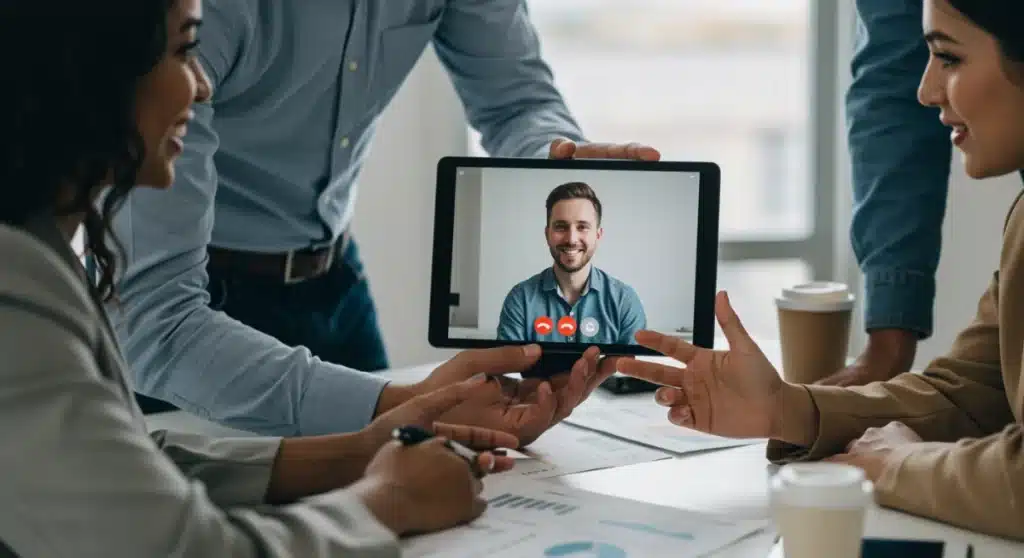
Integrating video into your sales process is projected to increase prospect engagement by 25% by 2025, offering a powerful method to connect with buyers in a competitive digital landscape.
In today’s fast-paced digital world, capturing and maintaining a prospect’s attention is more challenging than ever. However, a transformative shift is underway in sales, with video emerging as a critical tool. This article explores the impact of video in sales: drive 25% more engagement with prospects in 2025, offering actionable insights for sales professionals.
the undeniable rise of video in sales communication
The landscape of sales communication has evolved dramatically, moving beyond traditional emails and cold calls. Video has become an indispensable medium, allowing sales professionals to convey messages with greater clarity, emotion, and personalization. This shift is not merely a trend but a fundamental change in how buyers and sellers connect.
Prospects are increasingly overwhelmed by text-based communications. Video cuts through the noise, offering a more dynamic and memorable experience. It allows for a human connection that static text simply cannot replicate, building trust and rapport more effectively. The visual and auditory cues in a video message can convey enthusiasm, empathy, and expertise, which are crucial for establishing a strong relationship with potential clients.
why video resonates with modern buyers
- Increased personalization: Video allows for tailored messages that address specific prospect needs, making them feel valued.
- Enhanced clarity: Complex products or services can be explained more effectively through visual demonstrations.
- Emotional connection: Seeing a salesperson’s face and hearing their tone builds trust and rapport faster than text.
- Convenience: Prospects can watch videos at their own pace, on their preferred device, making it a flexible communication method.
The rise of remote work and digital-first interactions has only accelerated video’s adoption. Companies that embrace video are finding themselves at a distinct advantage, capable of fostering deeper connections and moving deals forward more efficiently. This strategic integration is key to staying competitive and relevant in the modern sales environment.
personalization at scale: video’s secret weapon
In a world saturated with generic outreach, personalization stands out as a powerful differentiator. Video offers an unparalleled opportunity to personalize sales interactions at scale, making each prospect feel uniquely addressed and understood. This goes beyond merely inserting a prospect’s name into a template; it involves crafting messages that directly speak to their specific challenges and aspirations.
Personalized videos demonstrate a higher level of effort and genuine interest, immediately setting you apart from competitors. When a prospect sees a salesperson addressing them by name, referencing their company, or even showing a snippet of their website, it creates an instant connection. This level of attention significantly increases the likelihood of a positive response and continued engagement.
crafting effective personalized video messages
- Start with a hook: Grab attention immediately by mentioning something specific about the prospect or their company.
- Keep it concise: Aim for videos between 60-90 seconds. Prospects have limited time.
- Focus on value: Clearly articulate how your solution can address their pain points or improve their situation.
- Include a clear call to action: Guide them on the next steps, whether it’s scheduling a demo or providing feedback.
The beauty of video lies in its ability to humanize the sales process. It’s not just about what you say, but how you say it, and video captures that nuance perfectly. Technologies now enable sales teams to create high-quality personalized videos quickly and efficiently, making this once-time-consuming task a scalable strategy for enhanced engagement.
boosting engagement metrics with video content
Beyond anecdotal evidence, data consistently shows that video significantly boosts key engagement metrics in the sales funnel. From higher open rates to increased meeting bookings, video is proving its worth as a performance enhancer. Sales teams leveraging video are seeing tangible improvements in how prospects interact with their outreach.
Video emails, for example, often boast significantly higher open and click-through rates compared to their text-only counterparts. This is because a video thumbnail in an email subject line or body acts as a powerful visual cue, prompting curiosity and encouraging recipients to engage. Once opened, the video itself holds attention longer than a block of text, ensuring your message is not just seen, but absorbed.
measurable impacts of video in sales
- Higher email open rates: Video thumbnails grab attention, leading to more opens.
- Increased click-through rates: Prospects are more likely to click on a video link than a text link.
- Longer engagement times: Videos hold attention for extended periods, allowing for deeper message absorption.
- Improved conversion rates: Better engagement naturally leads to more qualified leads and closed deals.
The impact extends beyond initial outreach. Video can be used throughout the sales cycle, from initial discovery calls to post-demo follow-ups and even proposal presentations. Each touchpoint offers an opportunity to leverage video for clearer communication and stronger relationship building, ultimately driving better outcomes. By strategically integrating video, sales organizations can track and measure these improvements, refining their approach for even greater success.
integrating video into the sales funnel effectively
Integrating video into the sales funnel is not about haphazardly sending videos, but rather strategically deploying them at critical touchpoints to maximize impact. A thoughtful approach ensures that video complements existing sales processes and enhances the buyer’s journey, rather than disrupting it. This involves identifying specific stages where video can add the most value and then tailoring the content accordingly.
From initial prospecting to closing deals, video can serve various purposes. Early in the funnel, short, personalized introduction videos can break the ice and establish a human connection. During the qualification stage, explainer videos or product demos can clarify complex features and address common questions. As prospects move closer to a decision, video testimonials or case studies can build trust and reinforce value.
strategic video placements in the sales journey
Understanding where and when to use video is paramount. It’s not a one-size-fits-all solution, but a versatile tool that can be adapted to specific needs at each stage.
- Prospecting: Personalized video introductions in cold emails or LinkedIn messages.
- Discovery: Video voicemails or follow-ups after initial calls, summarizing key points and next steps.
- Demonstration: Pre-recorded product demos or personalized walkthroughs addressing specific prospect pain points.
- Proposal: Video summaries of proposals, highlighting key benefits and ROI, or video testimonials from satisfied clients.
- Closing: Personalized thank-you videos or brief recaps of agreements to reinforce commitment.
Effective integration also requires the right tools and training. Sales teams need access to user-friendly video recording and editing software, as well as guidance on best practices for creating engaging content. By equipping sales professionals with these resources, companies can ensure video becomes a seamless and powerful component of their sales strategy, driving consistent engagement and better results.

best practices for powerful sales videos
Creating powerful sales videos requires more than just hitting record; it demands a strategic approach to content, presentation, and delivery. Adhering to best practices ensures that your videos are not only watched but also resonate with prospects, driving desired actions. The goal is to create content that is professional, authentic, and highly persuasive.
One of the most crucial elements is authenticity. Prospects can easily spot contrived or overly scripted videos. Salespeople should strive to be themselves, speaking genuinely and with enthusiasm. While preparation is important, a natural conversation style often yields better results than a rigidly rehearsed monologue. This authenticity builds trust and makes the interaction feel more personal.
key elements of effective sales videos
- Clear purpose: Every video should have a single, clear objective, whether it’s to introduce, educate, or call to action.
- Concise messaging: Get straight to the point. Most effective sales videos are under 90 seconds.
- Professional appearance: Ensure good lighting, clear audio, and a tidy background.
- Energetic delivery: Speak with enthusiasm and confidence, using appropriate body language.
- Strong call to action: Tell the prospect exactly what you want them to do next.
Furthermore, consider the technical aspects. Good audio quality is often more important than high-definition video. A clear, well-lit environment and a reliable microphone can significantly enhance the professionalism of your videos. Finally, always include a compelling call to action, guiding your prospect on the next steps to continue the conversation. By focusing on these best practices, sales teams can consistently produce videos that capture attention and drive results.
measuring roi and continuous improvement in video sales
Implementing video in sales is an investment, and like any investment, its return on investment (ROI) must be measured and continually optimized. Understanding the effectiveness of your video strategy allows for data-driven decisions, ensuring that resources are allocated wisely and that the approach evolves to meet changing market demands. Simply deploying videos is not enough; tracking their performance is essential for long-term success.
Key metrics to monitor include video view rates, completion rates, click-through rates on calls to action within videos, and ultimately, how video impacts conversion rates at various stages of the sales funnel. Analyzing these metrics provides insights into what types of videos resonate most with prospects, which messages are most effective, and where there might be opportunities for improvement. This iterative process of measurement and refinement is critical for maximizing the impact of video in sales.
metrics for evaluating video sales performance
- View rate: Percentage of recipients who watched the video.
- Completion rate: How much of the video was watched on average.
- Click-through rate (CTR): Number of clicks on calls to action within or after the video.
- Engagement rate: Interactions like likes, comments, or shares (for publicly shared videos).
- Conversion rate: How many video views led to a desired action, such as a booked meeting or a closed deal.
Tools and platforms designed for video sales often come equipped with analytics dashboards that make tracking these metrics straightforward. Sales leaders should regularly review these reports, share insights with their teams, and conduct A/B testing on different video approaches. This commitment to continuous improvement ensures that the video sales strategy remains agile, effective, and consistently contributes to driving higher engagement and better sales outcomes.
| Key Aspect | Description |
|---|---|
| Increased Engagement | Video captures attention more effectively than text, leading to higher open rates and longer viewing times. |
| Personalization Power | Tailored video messages create a stronger human connection and address specific prospect needs, fostering trust. |
| Strategic Integration | Deploying video at key sales funnel stages, from prospecting to closing, optimizes its impact and effectiveness. |
| Measurable ROI | Tracking metrics like view rates and conversions allows for continuous improvement and optimized video sales strategies. |
frequently asked questions about video in sales
Video humanizes the sales process, allowing for clearer communication, stronger emotional connection, and enhanced personalization. It helps sales professionals cut through digital noise and build rapport more effectively than traditional text-based methods, leading to higher engagement rates and better conversion outcomes.
Personalized videos demonstrate genuine interest and effort, making prospects feel uniquely valued. By addressing specific needs and referencing their context, these videos create an immediate connection, increase attention, and significantly boost the likelihood of a positive response and continued interaction throughout the sales cycle.
For prospecting, use short, personalized introductions. In discovery, video voicemails or follow-ups work well. During demos, use explainer videos or personalized walkthroughs. For proposals, summaries or testimonials are effective. Each stage benefits from tailored video content that addresses specific buyer needs and moves the conversation forward.
Essential tools include user-friendly video recording software (like Loom or Vidyard), a good quality microphone for clear audio, and adequate lighting. Some platforms also offer editing features and analytics. The key is to choose tools that enable efficient creation of professional-looking and sounding videos without extensive technical skills.
ROI can be measured by tracking metrics such as video view rates, completion rates, click-through rates on calls to action, and conversion rates directly attributable to video outreach. Analyzing these data points helps identify successful strategies, areas for improvement, and ensures that video efforts are directly contributing to sales objectives and revenue growth.
conclusion
The strategic adoption of video in sales is no longer optional; it’s a critical imperative for driving engagement and achieving sales objectives in 2025 and beyond. By embracing personalization, understanding key placement points in the sales funnel, and adhering to best practices for creation and measurement, sales teams can significantly enhance their ability to connect with prospects. The projected 25% increase in engagement through video underscores its power to transform sales interactions, build stronger relationships, and ultimately, close more deals in an increasingly competitive digital marketplace. Investing in a robust video sales strategy today will position companies for sustained success tomorrow.